How Our Brains Seek Out Information
Neuroscientist Jacqueline Gottlieb, PhD, and Economist Michael Woodford, PhD, are working to understand what motivates us to pay attention and invest in certain pieces of information.

Then November, when you join millions in voting, take a moment to ask yourself: How did my brain make this decision? Before going into the voting both, join Michael Shadlen, MD, PhD, on a journey inside the brain.
New Columbia research shows that the human brain employs precise, mathematical logic to decision-making, revealing new insight into the brain science that guides learning.
By examining birds' courtship rituals, and deciphering how they learn to sing to each other, Sarah Woolley, PhD, is shedding new light on how two brains can connect to become a pair.
This new study upends models of how the brain constructs interpretations of the outside world. The research could shed light on phenomena ranging from eyewitness testimony to stereotyping to autism.
Study lends insight into one of neuroscience’s greatest puzzles: how the brain transforms unconscious information into conscious thought.
A Q&A with Jacqueline Gottlieb, PhD
The Art Newspaper posed a simple question to a panel at New York’s Museum of Modern Art: “What is art for?” On that panel was Columbia University neuroscientist Eric Kandel, MD, who had simple answer.
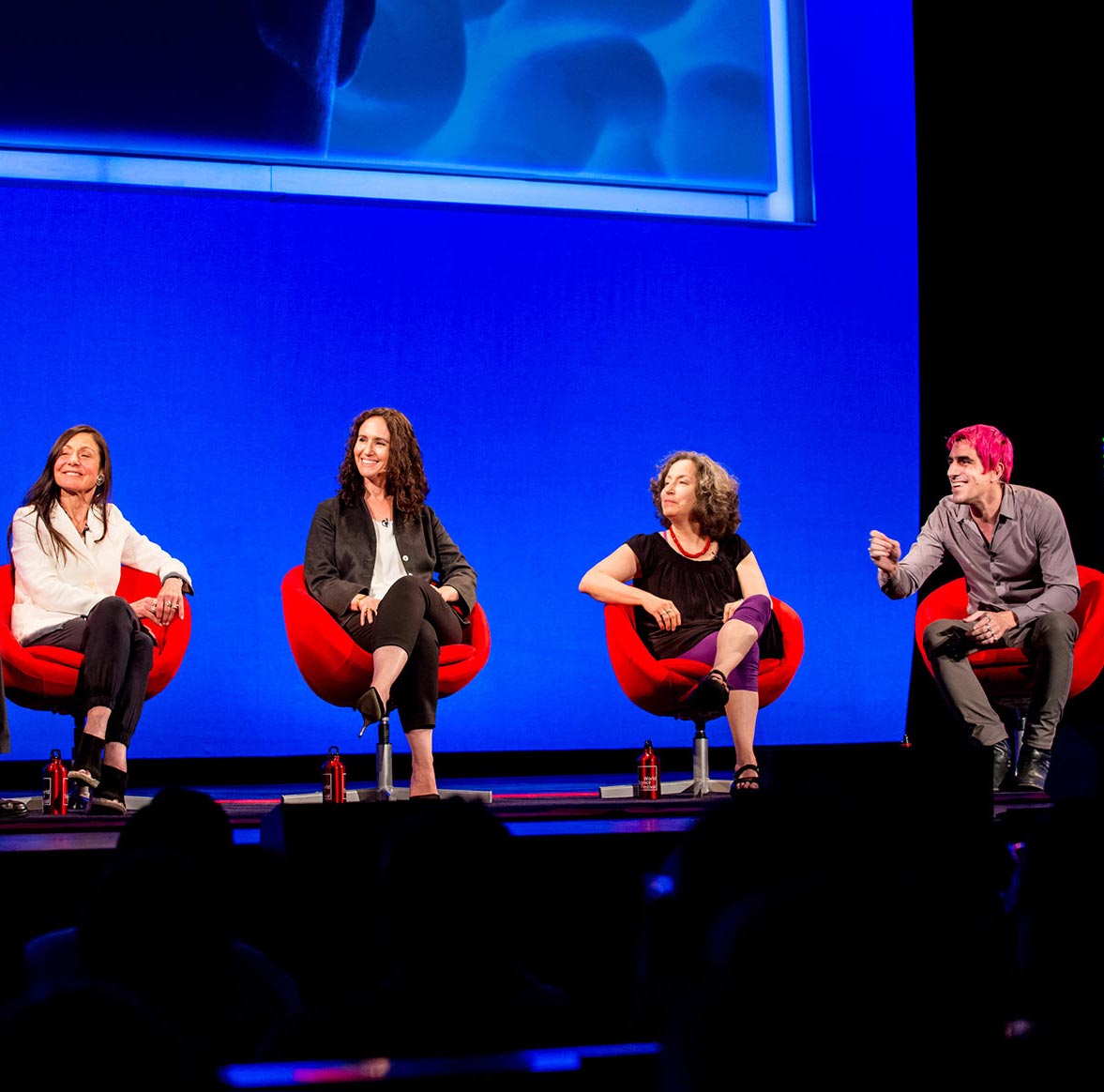
The World Science Festival concluded by addressing one of the hardest questions in science: How do our brains give rise to our sense of self?
What happens in the brain of a jazz musician when he or she plays a tune — and what happens in the brains of audience members when they hear it.