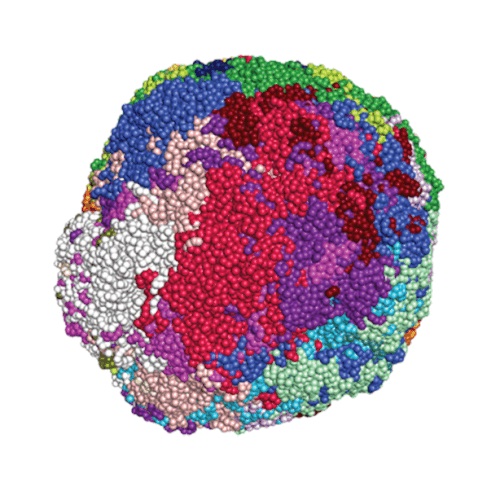
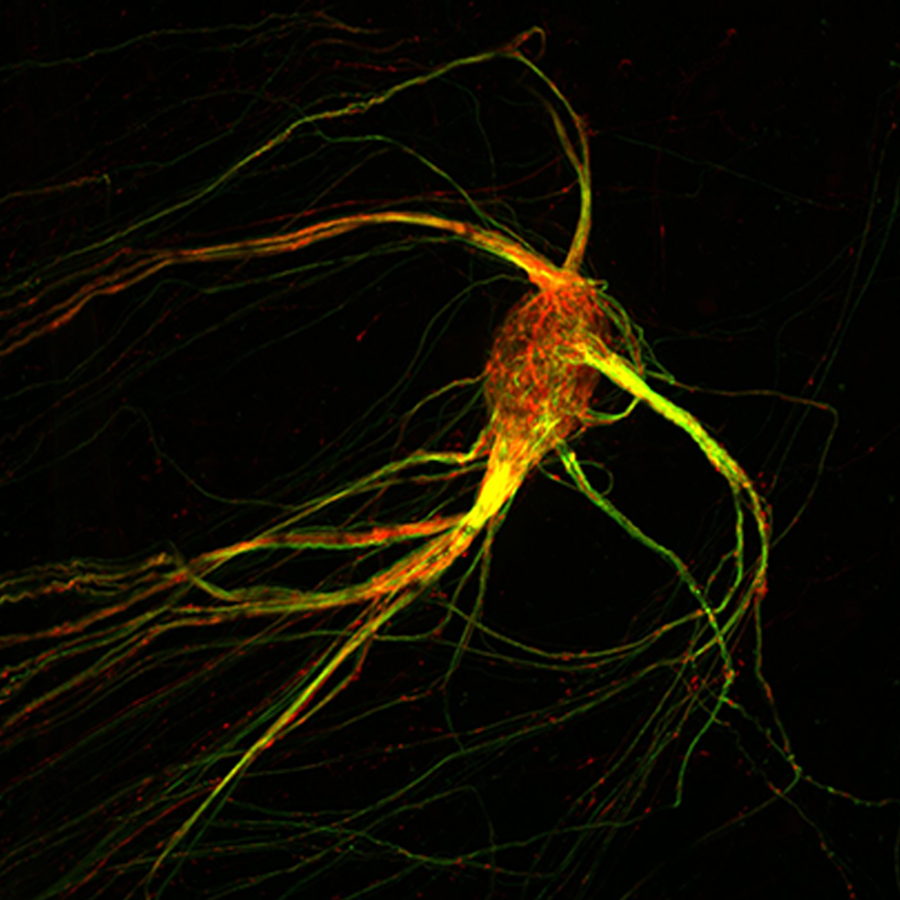
NEW YORK, NY — Our sense of smell depends on the right genes being turned on, which is controlled by vastly distant parts of our genome that are meeting and staying together. Newfound structures in mice, tagged green and magenta in this image and detailed in a Nature study by scientists at Columbia's Zuckerman Institute, shed light on how these gatherings happen and how they are maintained for the long life of a neuron.
This could be key to understanding not only our experience of scent but how diseases can damage our neurons, or nerve cells, robbing us of our sense of smell and other faculties.
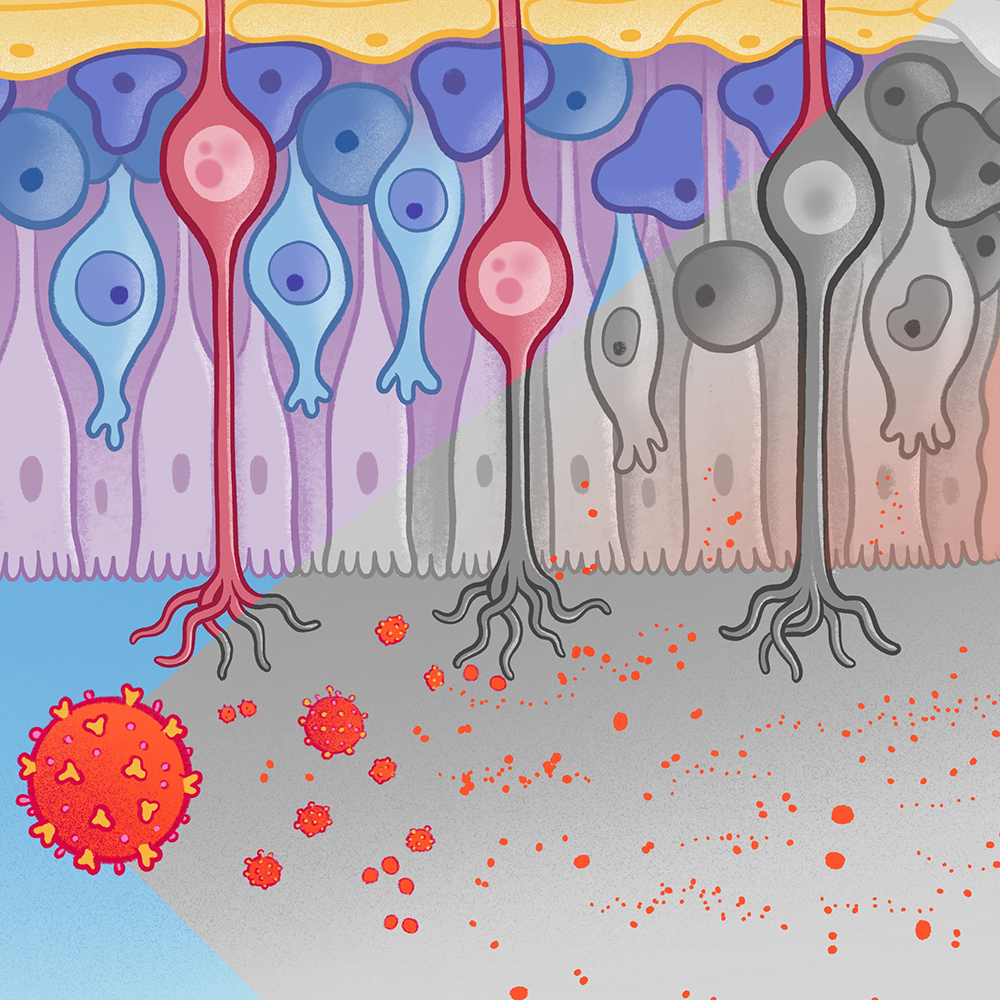
"Uncovering some of the fundamental principles behind genome organization will help us gain insight into how the health of neurons is maintained," said Joan Pulupa, PhD, a postdoctoral research scientist in the Lomvardas lab and co-first author on the new study. “That’s important because we see a loss of genome organization in neurodegenerative diseases such as Alzheimer’s and in other diseases such as COVID—it's what causes the loss of the sense of smell.”
The new research started with a mystery. Scientists knew that a gene becomes far more active when a short area of the chromosome known as an enhancer is brought close. But they also know that enhancers are sometimes located very far from their target genes, perhaps even on different chromosomes, and that the cell’s nucleus where they all hang out can be a hectic environment.
By analyzing living mouse olfactory neurons grown in lab dishes, Dr. Pulupa helped discover the existence of solid condensates that can help enhancers and genes stay together.. Whereas previous research suggested these meetings usually last only seconds or minutes, these solid condensates can make them last days. At the same time, Natalie McArthur, PhD, study co-first author and formerly a postdoctoral researcher at the Lomvardas lab, helped discover that these condensates involve specific enhancers and their targets, and not the rest of the genome.
The researchers found that these condensates are not only key to producing olfactory receptors — the molecules that help the brain detect scent — but are active in many neurons, where they may help organize vital activities involving the genome.
Moreover, these solid condensates appear involved in regulating the expression of genes that helps developing neurons mature into their final roles.
"The incredible stability of these structures may act as a kind of memory to help cells preserve activity that maintains their long-term identity," said Stavros Lomvardas, PhD, the study’s senior author and a principal investigator at Zuckerman and a professor of biochemistry and molecular biophysics at Columbia's Vagelos College of Physicians and Surgeons.
Future research will try and figure out what brings enhancers and their genes together. "The million dollar question is, 'How do they find each other?'" Dr. Pulupa says.