NEW YORK—What is the source of consciousness in the human brain? Conscious thought is widely considered a special class of activity in the brain that is distinct from the non-conscious computations that guide most behavior. Instead, the Zuckerman Institute's Michael Shadlen, MD, PhD, also a member of the Kanzer Center for Cognition and Reasoning, argues that a person's conscious thoughts start as non-conscious thoughts that transform to a form that may better be communicated with others or oneself.
We sat down with Dr. Shadlen, who is also a professor of neuroscience at Columbia University's Vagelos College of Physicians and Surgeons and an investigator at the Howard Hughes Medical Institute, to discuss his ideas on consciousness, published in the Proceedings of the National Academy of Sciences.
How would you define a non-conscious thought?
Let's explore what a thought is. It starts with a question that the brain has posed: “might I do X?” It culminates with an intention, an affirmative answer to that question: “yes, I might do X.” This intention is provisional; it may be jettisoned without ever giving rise to any further action.
Provoked by context and affordances or options in the environment, a thought can guide inference, action or further inquiry. From the perspective of neuroscience, then, a thought is a neural representation of a provisional intention that persists in time.
By definition, nonconscious thoughts are those we are not aware of, although they get us through most of our daily life. Were we aware of them, we’d call them conscious thoughts.
Nonconscious thoughts can be very rich in content, but they occur below the radar of your awareness. They're what let you cross the street without having to concentrate on walking, or keep you from biting your finger off while you're eating something you're holding.
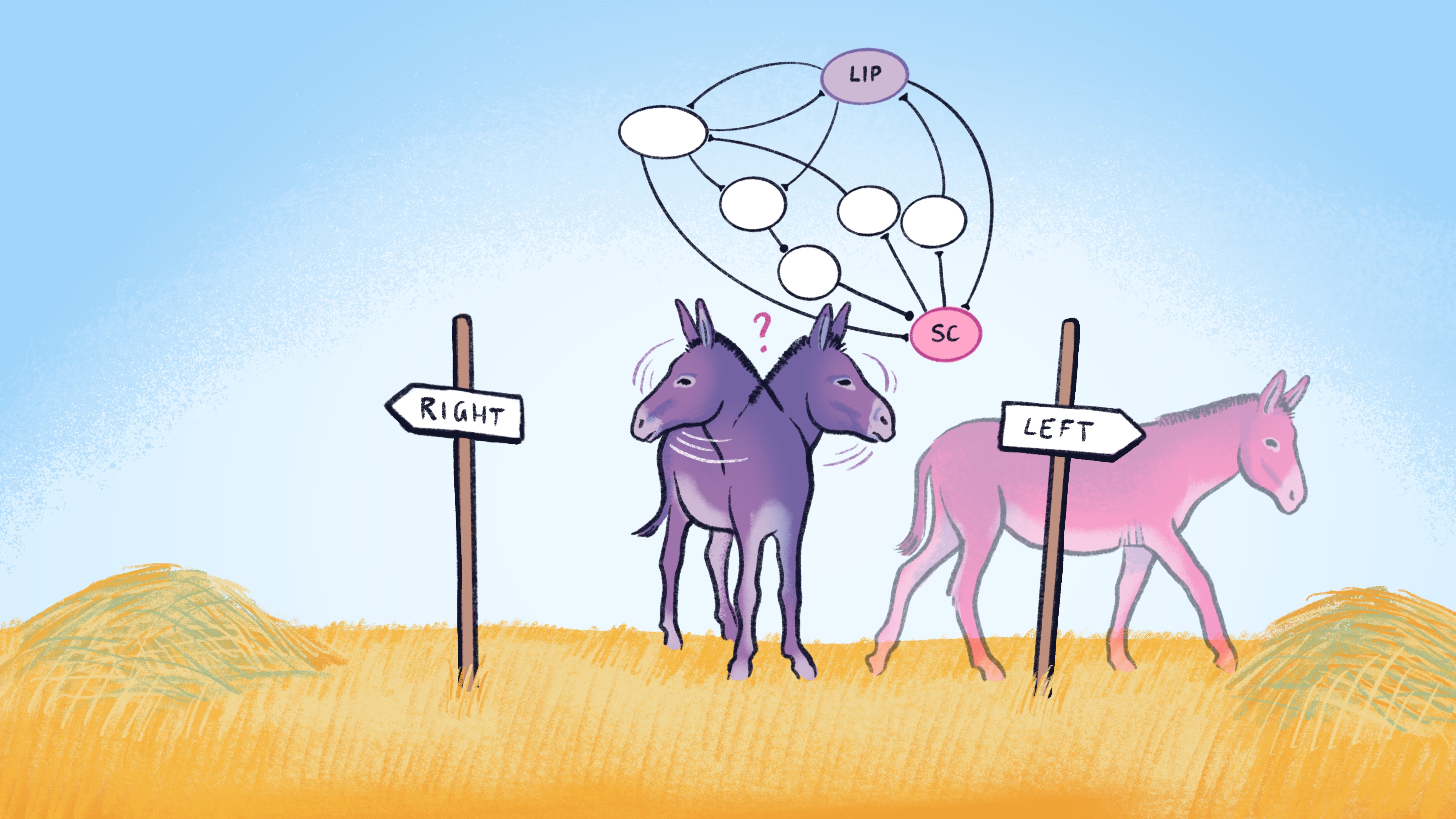
Based on what we've discovered about the neuroscience of decision-making, I argue that a nonconscious thought is structured as an interrogation. We're always scanning the world around us, and our brains don't simply take in sensory information — in effect, they ask questions. Is this something I can eat? Is this something I need to escape from? And so on.
We can see this in how the brain relays sensory signals to association areas that help organize a vast repertoire of actions. The brain constantly asks questions, and it constantly comes up with potential answers.
For me, a nonconscious thought represents a provisional intention to do something — a decision. The definition of 'decision' here is very broad — almost anything can be framed as one. You might decide to nod your head, or decide how you feel about someone.
How do you suggest non-conscious thoughts get transformed into conscious thoughts?
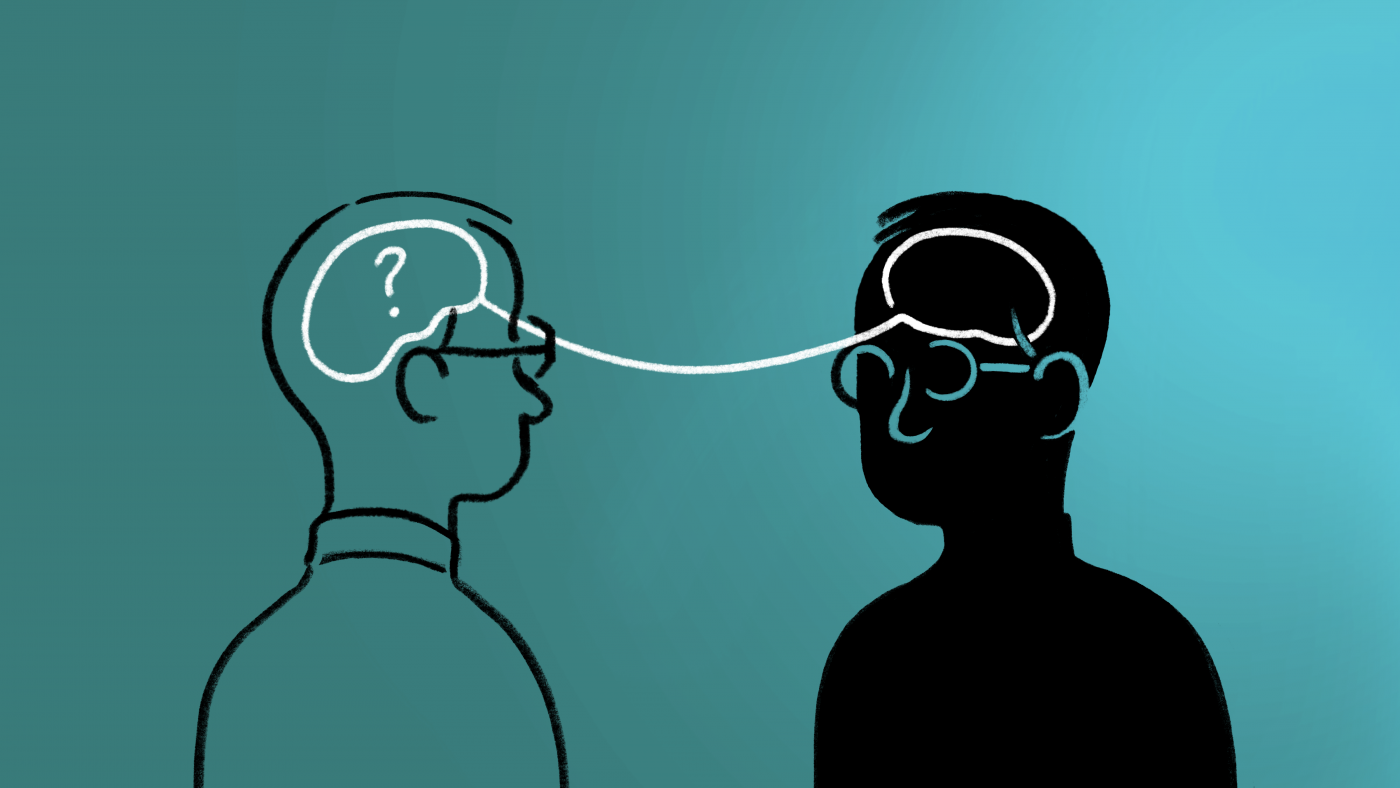
We evolved as social creatures, living and cooperating in groups, and that's probably where our evolutionary advantage over competitors came from. My proposal is that conscious thought arises when a nonconscious thought is reframed as something we intend to report, or give an account of, to another mind we presume to be like our own.
That intention to report transforms the content of the thought profoundly. It's no longer just about what something is and what it might mean for me; it now has to account for what it might mean to another mind, one presumed capable of understanding my report and experience.
I think this structure — existing in the space between one mind and another — may be the key signature of conscious thought. It resonates with what Martin Buber called 'the primacy of the between': the idea that meaning arises in relationship, not in isolation. And it may be part of why subjective experience feels so distinctive — because we're no longer accounting only for our own viewpoint, but for someone else's as well.
Is your model of consciousness rooted in "theory of mind" — our ability to understand other individual's perspectives, knowledge and thoughts?
Yes. It's through theory of mind that we come to understand that a world exists independent of our own instrumental needs. Our evolution in groups meant that our conscious world is always a shared world. Rebecca Saxe at MIT has made a number of discoveries about the neural mechanisms underlying theory of mind that relate to this idea, including identifying an area of the brain that's activated when people think about other people's thoughts.
That includes essentially communicating with oneself?
Yes. I think we ultimately derive the self from this kind of consciousness. The intention to report takes on a narrative quality — not that it requires language, but it's substantially augmented by it.
Since you suggest conscious thought is rooted in non-conscious thought, how can neuroscience provide insights into consciousness?
That's really the crux of the whole argument. If conscious thought is nonconscious thought that's been reframed for report, then studying nonconscious thought — which we can do directly, in the lab — gives us a tractable way into consciousness itself. That's what the neuroscience of decision-making has been doing all along, in my lab and many others: understanding how an animal's brain takes in information from the world — in my work, usually visual information — and uses it to solve a problem, to reach a decision. That work is really a study of nonconscious thought.
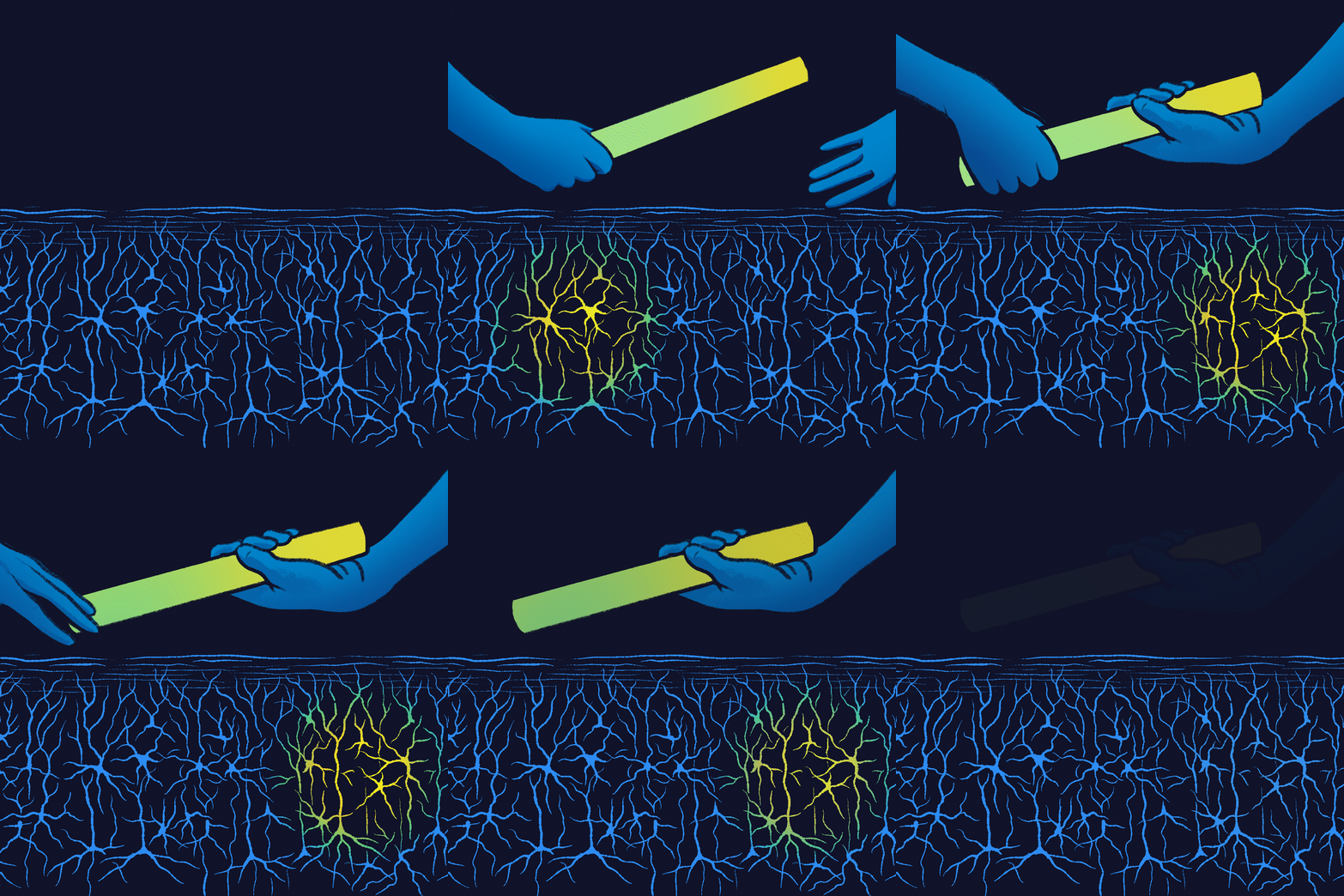
The insight is that this nonconscious machinery is also the raw material for consciousness — it's what gets repurposed when a thought is framed as something to report, to another mind or to oneself. So in a real sense, a great many neuroscientists are already studying the building blocks of consciousness. Even when they think they're just studying simple, innate behaviors. The circuitry they're characterizing is often the same circuitry we put to use when we're conscious.
What do you hope others take away from your work?
I'd want people to take away that the neurobiology of consciousness doesn't require some special mechanism, or brain area, that isn't already at play in nonconscious thought.
I also think some specific parts of this idea need to be tested. First, the mechanism I propose by which the brain tags nonconscious knowledge states with their provenance, or source. Secondly, whether that same mechanism extends to explain the first-person experience of conscious thought. If we can nail down the neural basis of source-tagging for nonconscious thought, full consciousness is likely to follow on its coattails.