IN BRIEF
• A new study in mice offers a promising approach to help gain a biological foothold on curiosity.
• The research shows that, like humans, mice seek out information, even when it gives no external reward.
• The intrinsic value of information is reflected in cells found in the orbitofrontal cortex of the mouse brain.
NEW YORK—We all hunger for information. Sometimes this drive leads us to a tangible reward, such as looking up reviews to find the perfect restaurant. But often we seek knowledge as an end unto itself, as when Galileo pointed his telescope at the night sky or Alice followed the rabbit down its hole. How do our brains lead us on such curiosity-driven quests for information?
Neuroscientists at Columbia University’s Zuckerman Institute have identified neurons that seem to play a role. In new research published July 30, in Nature Neuroscience, Jennifer Bussell, PhD, and colleagues uncovered a unique brain signal of the value of information. To do so, they first demonstrated that lab mice share our desire for knowledge in and of itself. The researchers’ observations should pique the interest not just of brain scientists but of educators, philosophers, economists and anyone who is curious about where curiosity comes from.
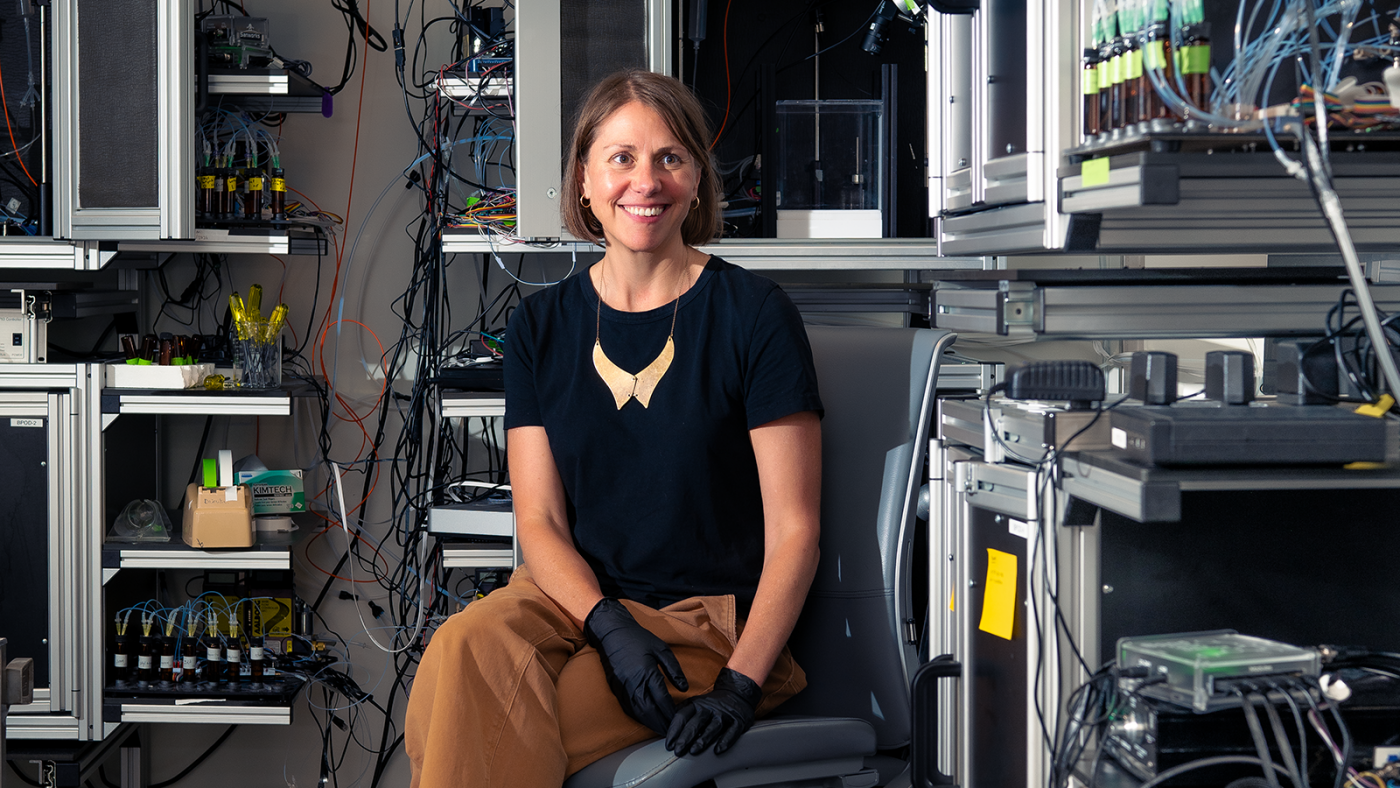
"One of the great joys of life is getting to be curious about everything around us, and we don't really know yet how that works in the brain," said Dr. Bussell, an associate research scientist in the Axel lab at Columbia's Zuckerman Institute. "This is a fascinating question that touches on everything from how children learn to how we all seek knowledge in a world full of information and misinformation."
People have thought about curiosity since at least the ancient philosopher Aristotle, who wrote that we all "by nature desire to know" and that we take a delight in our senses unrelated to their usefulness. Modern economists and psychologists have explore the topic by creating games in which volunteers can pay for information of no use to winning. In the middle of the 20th century, scientists designed similar games for rats and pigeons, establishing that animals besides us also seek out information.
Paper co-author Ethan Bromberg-Martin, PhD, of Johns Hopkins University School of Medicine, recently revived and expanded this approach in other animal models; he found that some parts of the brain respond to information in the same way as food and other external rewards–even though, unlike food, information cannot be sensed physiologically by the body. That inspired Dr. Bussell to investigate how information is identified and its value computed using the powerful neuroscience tools only available in mice.
“Since you can’t ask a mouse why it makes certain decisions, we had to design experiments in which they showed us their preferences,” said Dr. Bussell. “What we saw was that these animals had such a strong desire for knowledge about upcoming events that they would pay to receive it.”
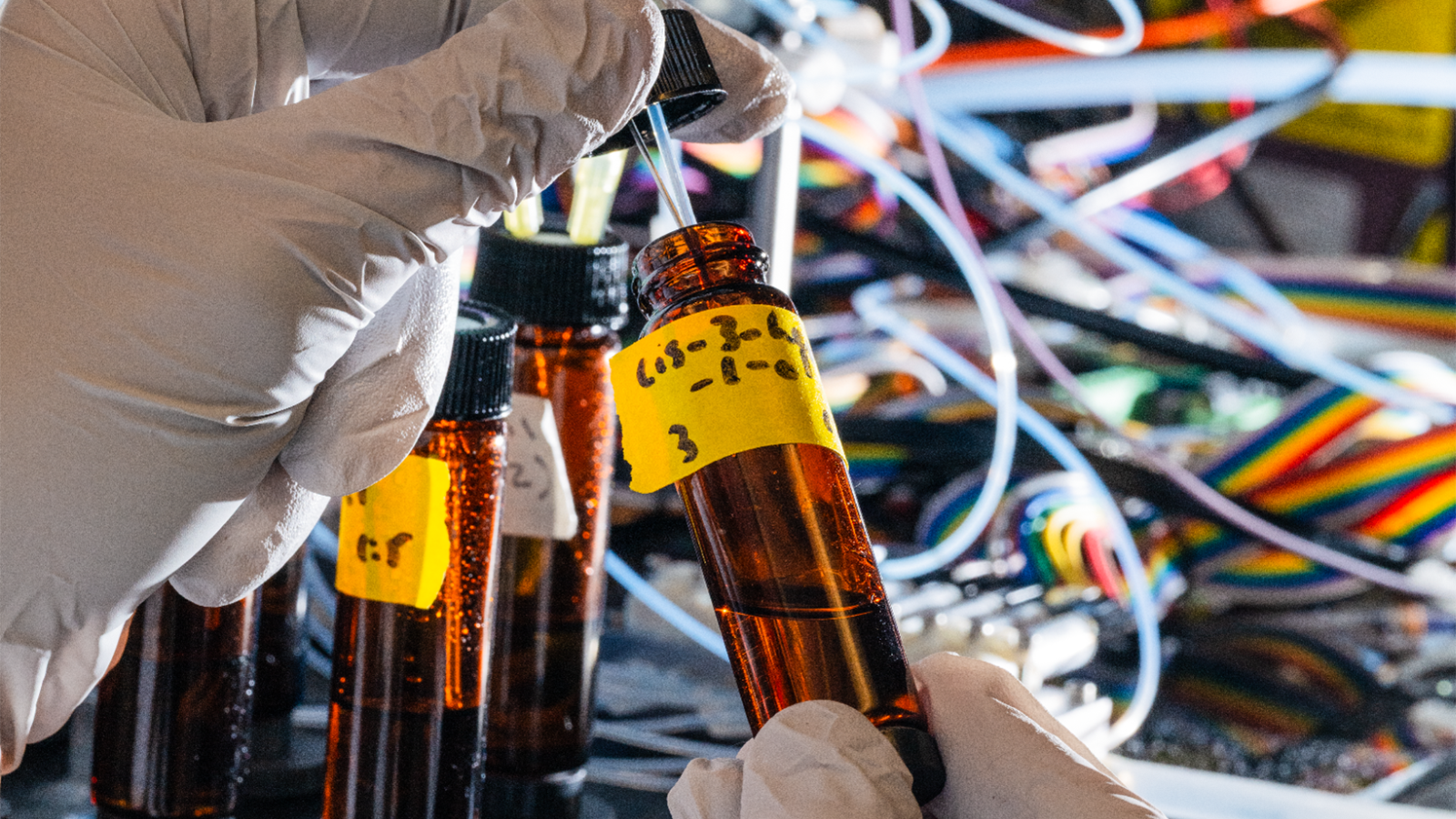
As the mice learned to play this game, Dr. Bussell monitored large groups of neurons simultaneously in their brains. Here she drew on the deep expertise of colleagues in the Axel lab in deciphering how mouse neurons encode smell. The team’s recent work revealed how a mental representation of a smell changes when that smell becomes associated with a water reward. With this research in hand, Dr. Bussell went looking for the neural signature of an odor becoming associated with knowledge.
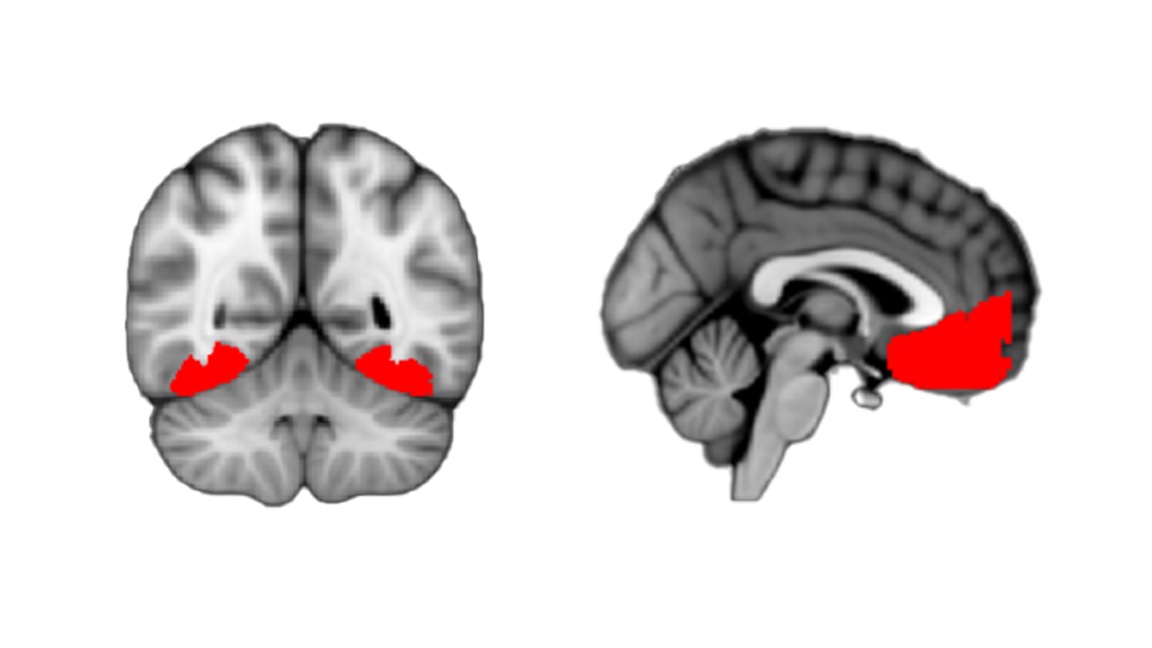
By comparing brain activity when the mice sought information versus no information, Dr. Bussell identified cells behaving differently based on the animals’ expectation: some 20 percent of the neurons in a brain region called the orbitofrontal cortex, which helps animals make decisions, showed different activity in the information condition. This neural response signaled the value of the information the mice expected to receive.
Diving deeper, Dr. Bussell also compared the brain activity when the mice expected either a large or small amount of water. This helped her tease apart one pattern related to the extrinsic value of how much water a mouse expected to receive and another pattern related to the intrinsic value of the information. This representation of information value in the decision-critical orbitofrontal cortex could potentially guide animals in the pursuit of knowledge.
Why the brain of a mouse or a human would have this penchant for information remains an open question. Perhaps during the course of evolution, the importance of information that helped animals survive caused the value of knowledge itself to become hardwired. We may simply get pleasure from finding things out, a possibility that holds particular appeal to a curiosity-driven scientist like Dr. Bussell.
Another possibility is that animals simply do not like uncertainty; Dr. Bussell’s research found some evidence for this in that the longer a mouse had to wait to drink, suspended in a period of uncertainty, the more likely it was to choose information. Yet another alternative hypothesis is the view that knowing what’s coming increases the delight in anticipation, like that of looking forward to an upcoming vacation.
“The field of curiosity is just getting started,” said Dr. Bussell. She is planning future studies to further trace the neural circuitry of information and uncover additional parts of the brain that trigger curiosity.
###
The paper, “Representations of the intrinsic value of information in mouse orbitofrontal cortex,” was published in Nature Neuroscience on July 30. The full list of authors includes Jennifer J. Bussell, Ryan P. Badman, Christian D. Márton, Ethan S. Bromberg-Martin, L.F. Abbott, Kanaka Rajan and Richard Axel.