Meet the Sensorimotor Control Fellows
Meet the Sensorimotor Control Fellows
The NIH T32 Training Program in Integrated Computational and Experimental Sensorimotor Control at Columbia University supports postdoctoral fellows pursuing interdisciplinary research on the neural basis of movement. The program brings together experimental and computational approaches to advance understanding of sensorimotor control across model systems and levels of analysis. Fellows are co-mentored by faculty representing both experimental and computational/theoretical neuroscience and receive two years of NIH-supported training. In addition to their independent research, fellows participate in a faculty-directed curriculum that includes the core course Topics in Sensorimotor Control, experimental design workshops, journal clubs, hackathons, and cross-laboratory collaborations. As members of the Zuckerman Institute community, fellows have access to state-of-the-art research facilities, shared scientific resources, and a vibrant intellectual environment that spans disciplines. The program also provides structured career development mentorship and professional development opportunities to support fellows as they prepare for leadership roles in academia, industry, and related fields.
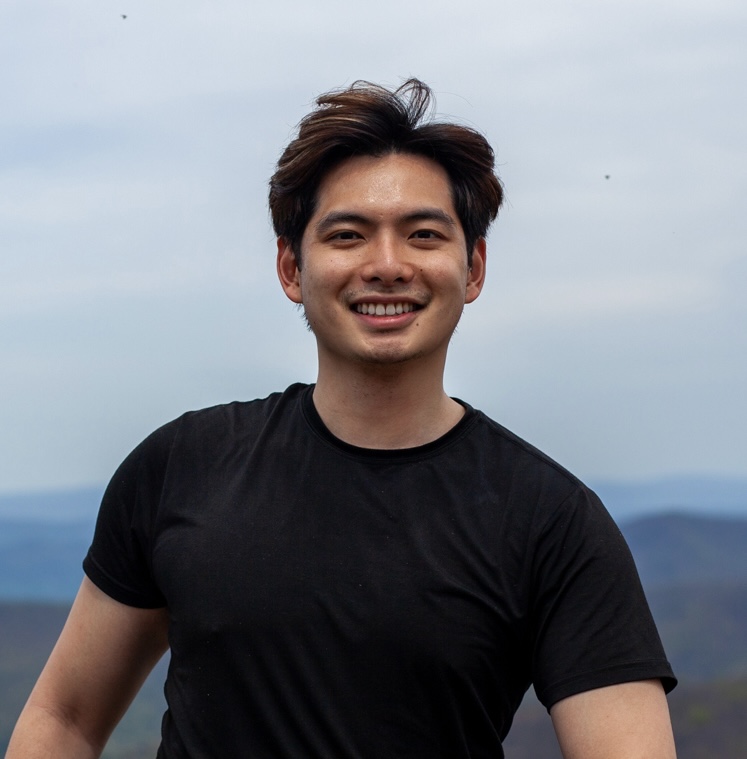
Jordan Lei, PhD (he/him)
PhD Institution: New York University
Mentors: Daniel Wolpert and Kimberly Stachenfeld
Bio: Jordan Lei began his research journey at the University of Pennsylvania, where he studied computer science and economics through the Jerome Fisher Program in Management and Technology. There, he worked with Vijay Balasubramanian, Konrad Kording, and Joshua Gold on research spanning biologically inspired learning algorithms and computational models of visual attention. He subsequently earned his PhD in Neural Science at New York University, working with Wei Ji Ma to investigate the computational and neural mechanisms of planning and decision-making. His doctoral research combined the design of online behavioral experiments, computational modeling of human and nonhuman primate behavior, and analysis of neural recordings to understand how organisms make decisions and adapt their behavior in complex, uncertain environments. At the Zuckerman Institute, Jordan's research focuses on understanding how the brain learns about the physical environment and uses this knowledge to support flexible, goal-directed action.
Research Summary: Working with Kim Stachenfeld and Daniel Wolpert at the Zuckerman Institute, Jordan investigates how the brain learns to interact flexibly with the physical world. Everyday behavior requires translating goals into actions that take advantage of the environment around us. From navigating uneven terrain to manipulating unfamiliar objects, we must learn how the physical properties of our surroundings shape what actions are possible and effective. His research focuses on how the brain learns and represents these relationships, often described in terms of affordances, and how these representations support flexible action across different environments and tasks. In particular, he is interested in how knowledge of environmental structure is acquired through experience, generalized to novel situations, and used to guide movement. To investigate these questions, Jordan combines human behavioral experiments with computational models of learning and sensorimotor control.
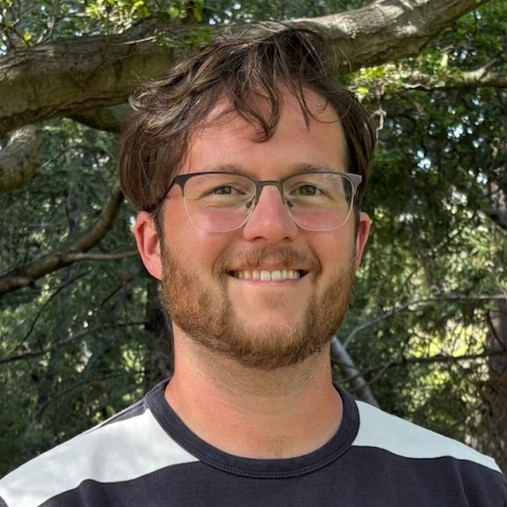 Logan Thomas, PhD (he/him)
PhD Institution: University of California, Berkeley
Mentors: Vikram Gadagkar and Larry Abbott
Bio: After graduating from Northeastern University in 2015, Logan Thomas was a software engineer at Cakewalk, an audio software company, working on signal processing algorithms for software made to create music. After that, he worked in the Connectomics lab of Wei-Chung Allen Lee at Harvard Medical School, working on understanding the circuits of the cerebellum using connectomics methods for circuit reconstruction. As a PhD student in the Theunissen lab at UC Berkeley, Logan studied auditory processing in zebra finches. He developed novel chronic recording methods and encoding models to investigate how behavioral context shapes neural responses, revealing that distinct neural populations in primary and secondary auditory areas specialize in sound seg mentation versus identification. His work demonstrates how active categorization enhances neural precision and adapts tuning to optimize discrimination between behaviorally relevant categories. As of 2026, Logan is both an Alan Kanzer Fellow and a Fellow in the Integrated Computational and Experimental Sensorimotor Control program at the Zuckerman Institute.
Research Summary: Working with Vikram Gadagkar and Larry Abbott at the Zuckerman Institute, Logan's research investigates the neural mechanisms underlying female mate choice in zebra finches, focusing on how female finch brains evaluate and respond to male courtship songs. His work comprises two interconnected projects that explore the pathway from sensory perception to behavioral attraction. This research leverages Logan's expertise in high-density electrophysiology and encoding models, while collaborating with labs at the Zuckerman Institute specializing in behavioral preference assays and dopamine signaling. The findings will illuminate fundamental mechanisms of mate choice and could provide broader insights into preference and decision-making across species.
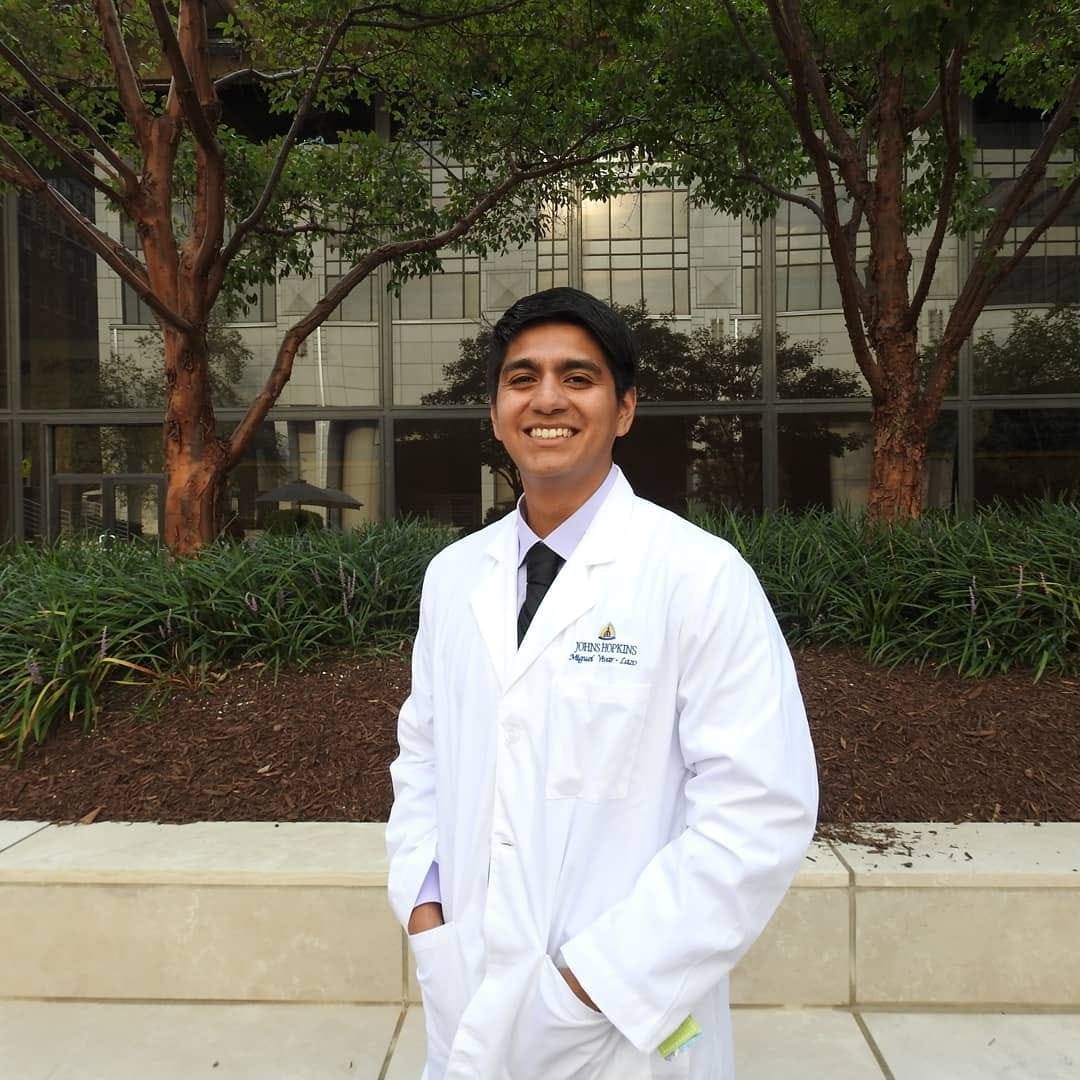 Miguel Vivar-Lazo, PhD (he/him)
PhD Institution: Johns Hopkins University
Mentors: Mark Churchland and Lea Duncker
Bio: A native of New Jersey, Miguel-Vivar Lazo began his scientific career at Rutgers University–New Brunswick. There, he conducted interdisciplinary research modeling both the surface morphology of the 25143 Itokawa asteroid and the perceptual mechanisms underlying the Hermann Grid illusion. After earning his degree in Biomedical Engineering, Miguel-Vivar Lazo moved to Johns Hopkins University to pursue his PhD, where he investigated the neural computations underlying perceptual decision-making and visual confidence. As a Postdoctoral Fellow at Columbia University’s Zuckerman Institute, his research focuses on uncovering how the brain generates complex and flexible movements.
Research Summary: Working with Mark Churchland and Lea Duncker at the Zuckerman Institute, Miguel-Vivar Lazo’s research investigates how the brain composes complex movements from simpler learned actions. Everyday behavior often requires combining previously learned motor sub-skills into new and flexible actions, a property known as compositionality, which also enables the ability to solve novel problems using prior knowledge, or zero-shot learning. His work focuses on understanding how the neural dynamics of the Primary Motor Cortex support this compositional structure of behavior. In particular, his research explores how motor sub-skills are represented and combined in neural activity, whether compositional mechanisms enable rapid or one-shot learning of new actions, and how upstream brain regions coordinate with motor cortex to assemble complex behaviors. To address these questions, Miguel combines behavioral and electrophysiological experiments with theoretical and computational tools designed to dissect the neural mechanisms underlying flexible motor control.