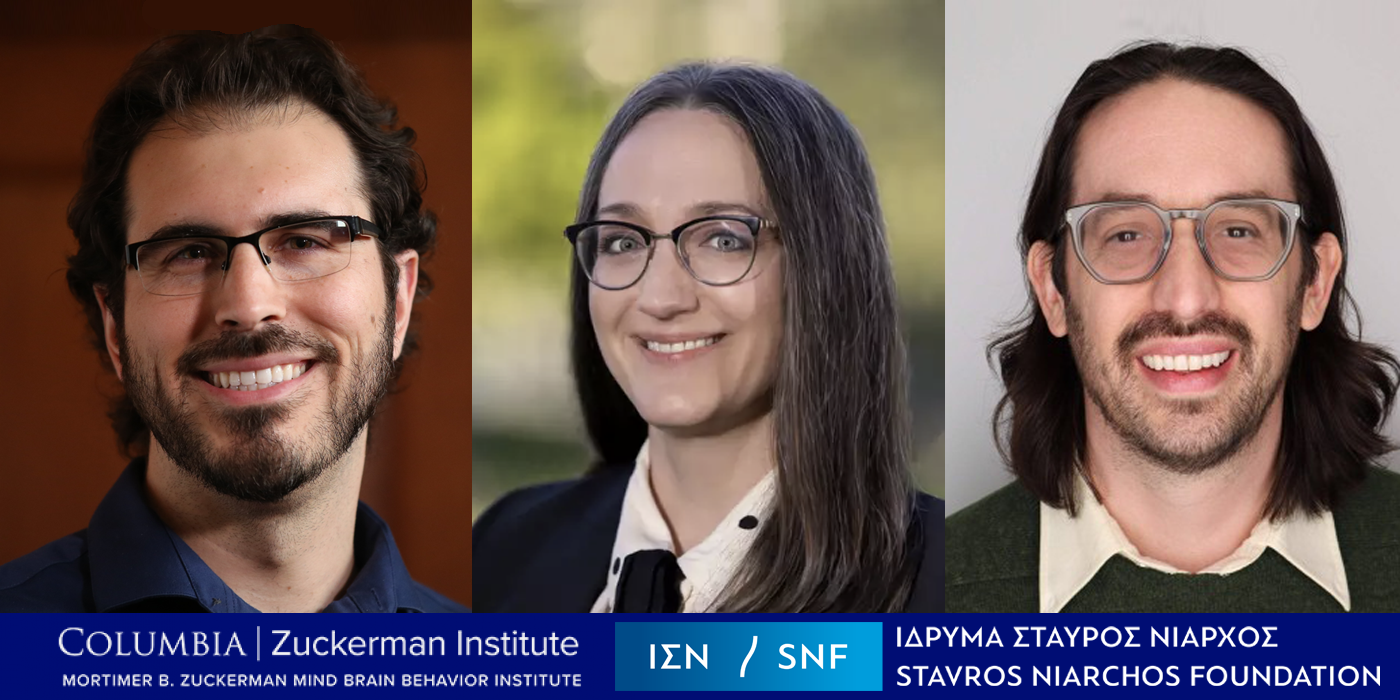
Categories help us make sense of the world and can even offer us points of shared identity. But, they can also end up obscuring the breadth and depth of experiences held by individuals, leaving needs unmet. In this lecture, three experts come together to explore this nuance and complexity within autistic populations. Combining perspectives from education and psychology, they discuss the importance of centering autistic narratives and understanding the diversity of their experiences in research. Could that individuality be the key to designing better evidence-based supports for autistic individuals throughout each chapter of their life?
Matthew Zajic, PhD, Assistant Professor of Intellectual Disability/Autism at Teachers College, Columbia University, will open our event by shining a light on the diverse landscape of literacy and writing skills in autistic individuals across the lifespan. In collaboration with autistic colleagues and community partners, Dr. Zajic’s research reveals the striking heterogeneity central to the autistic experience and encourages us to consider more than just the dichotomy of who is and isn’t on the spectrum. How might this focus on individual variation deepen our understanding of how youth across the spectrum develop their writing skills? And how can we use those insights to design effective literacy supports for autistic writers?
Erica Musser, PhD, ABPP, Assistant Professor and Vice Chair in the Department of Psychology at Barnard College, Columbia University, will then discuss her work building a more full and dynamic picture of neurodevelopmental conditions through her research on ADHD and discuss the application of this approach to autism. Current criteria for diagnosing such conditions rely on broad, static categories, which leave little room to address the changes that arise throughout a person’s life, especially during adolescence. Furthermore, they often fail to predict which interventions will be the most effective. By creating a better understanding of the lived experiences of autistic teens and young adults, Dr. Musser’s research aims to provide practical, adaptive supports for young people navigating the transition to adulthood.
Following the two talks, Andrew Marin, PhD, Postdoctoral Research Scientist in the Department of Psychology at Columbia University, will moderate a discussion and Q&A with the speakers. Audience questions are welcomed, either submitted during registration or live at the event.
About the experts
Matthew Zajic, PhD, is Assistant Professor of Intellectual Disability/Autism in the Health Studies & Applied Educational Psychology Department at Teachers College, Columbia University. His research focuses on understanding and supporting the writing development of individuals on the autism spectrum across the lifespan, emphasizing theory, measurement and assessment, and instruction and intervention. Grounded in interdisciplinary training across education, special education, and psychology, he completed a postdoctoral fellowship in autism and education research as well as advanced fellowships in psychometrics, assessment of special populations, and applied mixture modeling. He has led and collaborated on numerous funded projects examining the writing experiences of autistic and non-autistic learners. This work spans a national survey on pandemic literacy learning, studies examining the influences of interest and task modality on writing achievement, and the telepractice implementation of evidence-based writing and literacy practices. Additionally, he co-leads the Autistic Research on Writing Network, a collaborative partnership dedicated to advancing research on autistic writing development, which includes a currently funded mixed-methods project examining autistic adolescent writing experiences. He serves on the Literacy Advisory Council for NYC Reads and sits on the editorial boards of the Journal of Educational Psychology, Journal of Special Education, Research in Autism, Journal of Autism and Developmental Disorders, and Lifespan Writing Research.
Erica Musser, PhD, ABPP, is an Assistant Professor and Vice Chair in the Department of Psychology at Barnard College, Columbia University. Her research focuses on the nature and clinical presentation of neurodevelopmental disabilities with a focus on ADHD and autism. The overarching goal of her work is to better elucidate the mechanisms linking emotional functioning (e.g., negative and positive emotion reactivity, emotion regulation, emotion recognition) to child psychopathology, broadly, and to neurodevelopmental disabilities, specifically. To do this, she utilizes a multi-method approach, which has included behavioral ratings, interviews, computerized testing, behavioral coding, and physiological measures of autonomic, and more recently, central nervous system activity. As a licensed clinical psychologist and board-certified clinical child and adolescent psychology, Dr. Musser is interested in improving understanding of these conditions to enhance assessment and diagnosis, as well as to develop more tailored and neuroaffirming care for individuals with neurodevelopmental disabilities.
Andrew Marin, PhD, is a Postdoctoral Research Scientist in the Department of Psychology at Columbia University. His research focuses on the development of sensory processing from infancy to adulthood and how these abilities may differ in neurodevelopmental conditions like autism. His work examines how the brain learns to anticipate and integrate sensory information across perceptual, social, and cognitive contexts, with a particular focus on how genetic and heritable factors shape neurodevelopment. Using neuroimaging, behavioral methods, and developmental assessments, his research investigates developmental trajectories of sensory and cognitive processes and how differences in learning and genetic risk contribute to individual differences in autism and related neurodevelopmental outcomes.
This talk is part of the Stavros Niarchos Foundation Brain Insight Lecture series, offered free to the public to enhance understanding of the neuroscience of the mind and the complexity of human behavior. The lectures are hosted by Columbia’s Mortimer B. Zuckerman Mind Brain Behavior Institute and supported by the Stavros Niarchos Foundation. When registering, please indicate whether you wish to attend in person or watch the livestream virtually. All registrants will receive a Zoom link for the livestream and a recording of the lecture afterwards.