Frank Bradke, PhD
Senior Group Leader and Professor
German Center for Neurodegenerative Diseases (DZNE), Germany
Host(s): Carol Mason (Faculty), Wesley Grueber (Faculty)
Mechanisms of Axon Growth and Regeneration
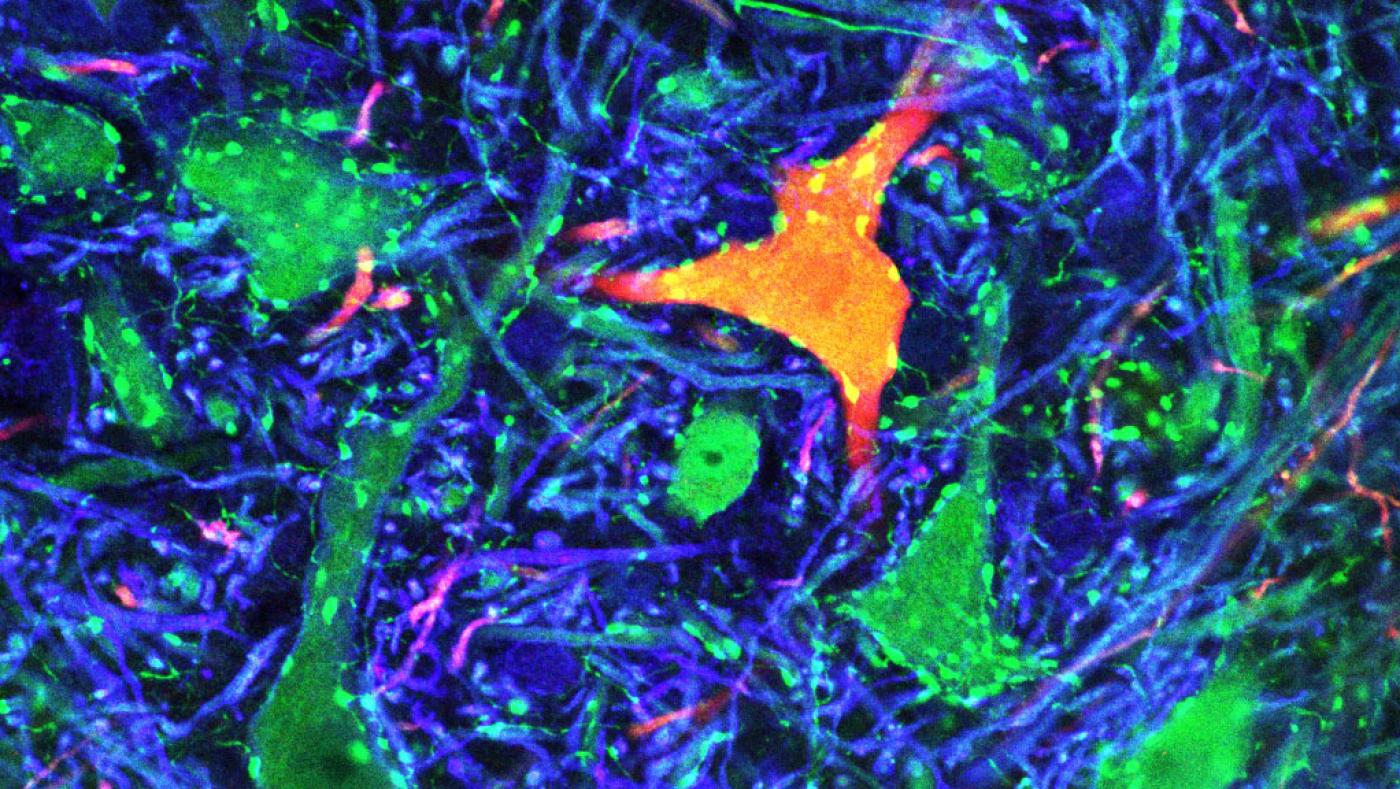
Almost everybody who has seen neurons under a microscope for the first time is fascinated by their beauty and their complex shape. Early on during development, however, neurons look round and simple without signs of their future complexity. How do neurons develop their sophisticated structure? How do they initially generate domains that later have distinct functions within neuronal circuits, such as the axon? And, can a better understanding of the underlying developmental mechanisms help us in pathological conditions, such as a spinal cord injury, to induce axons to regenerate? Here, I will talk about the cytoskeleton as a driving force for initial neuronal polarization and axon growth. I will then explore how cytoskeletal changes help to reactivate the growth program of injured CNS axons to elicit axon regeneration after a spinal cord injury. Finally, I will discuss whether axon growth and synapse formation could represent mutually excluding processes. Pursuing this developmental hypothesis has helped us to generate a novel perspective on regeneration failure in the adult CNS and to provide new therapeutic paths to overcome this. Thus, this talk will describe how we can employ developmental mechanisms to induce axon regeneration in the adult after a spinal cord injury.
Relevant Publications:
RhoA drives actin compaction to restrict axon regeneration and astrocyte reactivity after CNS injury
About Frank Bradke, PhD
After studying at the Freie Universität Berlin and University College London, Bradke carried out research at the European Molecular Biology Laboratory (EMBL) in Heidelberg as part of his doctoral thesis. As a postdoctoral researcher, he moved to the University of California in San Francisco and Stanford University in 2000. In 2003, he was appointed a group leader at the Max Planck Institute of Neurobiology in Martinsried. In 2011, he was awarded the IRP Schellenberg Prize, one of the most prestigious awards in the field of regeneration research. In the same year he became full professor at the University of Bonn, and was appointed head of the Axon Growth and Regeneration research group at the DZNE. Bradke is an elected a member of the Leopoldina (the German National Academy of Sciences), the Academia Europaea, and the European Molecular Biology Organization (EMBO). In 2016, he was awarded the Leibniz Prize, which is the most important research award in Germany. In 2018, he received the Roger de Spoelberch Prize and in 2021 he was selected for the Carl Zeiss Lecture. In 2023, he was awarded the Remedios Caro Almela Prize for Research in Developmental Neurobiology, the highest international prize for Developmental Neurobiology. In 2024 , Frank Bradke was named a Henriette Herz Scout of the Alexander von Humboldt Foundation and received the Academy Prize of the Berlin Brandenburg Academy of Sciences and Humanities, the highest prize of a German Academy (this prize is given only biannually).