What can science teach us about how we perceive and understand art? How can art help us understand ourselves and each other? In this event we explore the interactions between our brains and the artistic world, finding connections and parallels between art and science.
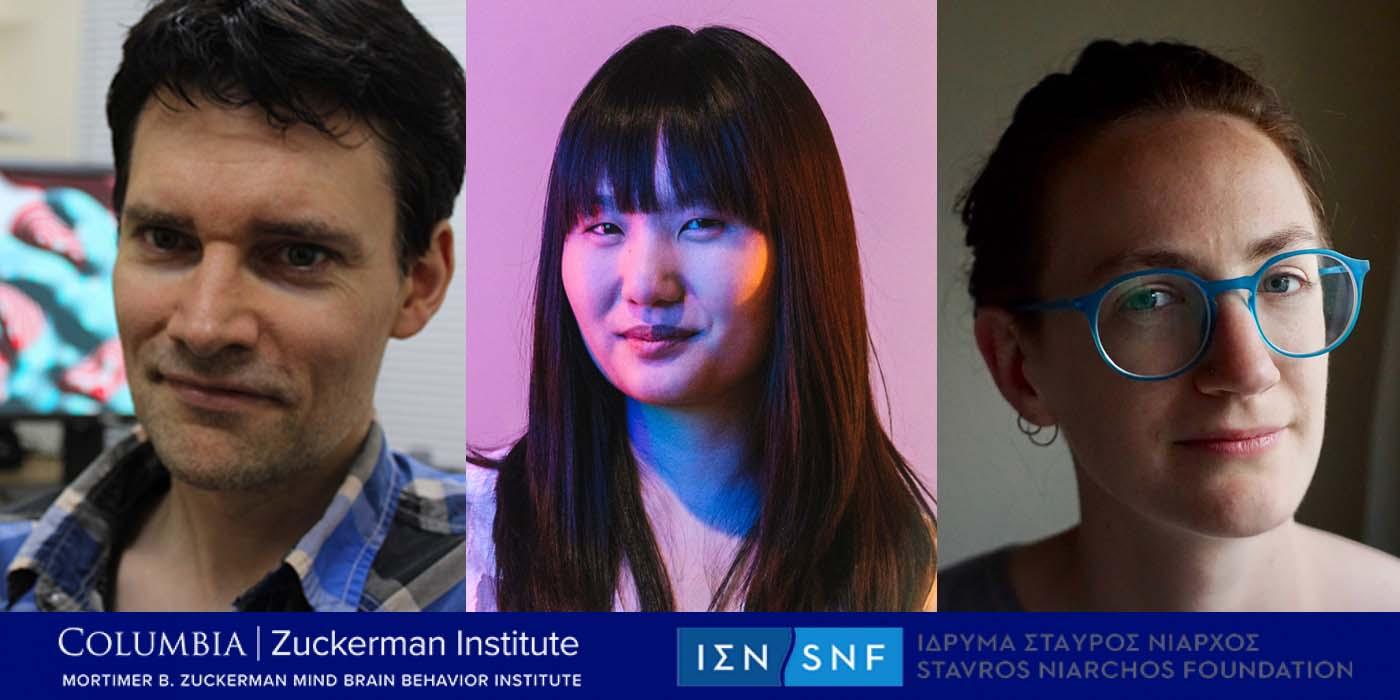
In this event we will hear two talks from experts who work at the interface of science and art: Nikolaus Kriegeskorte, Professor of Psychology and Neuroscience and Director of Cognitive Imaging at the Mortimer B. Zuckerman Mind Brain Behavior Institute at Columbia University, and Amanda Phingbodhipakkiya, multidisciplinary artist, educator and activist. Following the talks, Katy Gero, a PhD student in Computer Science at Columbia University, researcher, poet and essayist who studies and designs interactive AI tools with a focus on creative writing, will moderate a conversation with the speakers. Audience questions are welcomed, either submitted during registration or live during the event.
Like art, the human mind is often approached in terms of its form and its content. The content of the mind is our perceptions, thoughts, memories and actions—a lifelong weave of mental representations. The form is the dynamic patterned activity across billions of neurons in our brains. Traditionally, neuroscience has focused on the form, and cognitive science on the content of the mind. Nikolaus Kriegeskorte’s lab lies in between these disciplines and tries to forge connections. In his talk, “The form and content of the mind”, he will argue that the distinction of form and content is fundamental and yet also limiting when it prevents us from understanding how the two are inextricable, which is the essence of both art and mind.
Nikolaus Kriegeskorte, PhD, is a computational neuroscientist who studies how our brains enable us to see and understand the world around us. He is a Professor of Psychology and Neuroscience at Columbia University and an affiliated member of the Department of Electrical Engineering. He is a Principal Investigator and Director of Cognitive Imaging at the Mortimer B. Zuckerman Mind Brain Behavior Institute at Columbia University. He received his PhD in Cognitive Neuroscience from Maastricht University, held postdoctoral positions at the University of Minnesota and the U.S. National Institute of Mental Health in Bethesda, and was a Programme Leader at the U.K. Medical Research Council Cognition and Brain Sciences Unit at the University of Cambridge, UK. Kriegeskorte is a co-founder of the conference “Cognitive Computational Neuroscience.”
As a multidisciplinary artist, Amanda Phingbodhipakkiya employs a wide variety of media—from large scale murals to participatory installation work, digital art and augmented reality—to engage audiences and express themes of representation and belonging. Before her life as an artist, she worked at Columbia Medical Center in a neuroscience lab exploring the aging brain. In this talk, she will share some of her latest work, centered around human rights and uplifting the AAPI community, and discuss what science has uncovered about how artistic expression can cultivate our brain, health and sense of resilience. You’ll walk away with a deeper appreciation of the parallels between artists and scientists and maybe feel compelled to try a bit of creative expression yourself.
As artist-in-residence with the NYC Commission on Human Rights, Amanda’s art series celebrating the resilience of the AAPI community, “I Still Believe in Our City'', reached millions in New York City and worldwide through her Atlantic Terminal billboard, subway domination and social media amplification. In the wake of the Atlanta shootings in March 2021, art from the series appeared on the cover of TIME magazine. From large-scale murals, augmented reality (AR) experiences, 3D printed sculptures and interactive installations, Amanda makes the invisible, visible. She has explored microscopic universes, familial memories and the power of collective action, challenging viewers to rethink the world around them and revealing the often unseen depth, resilience and beauty of marginalized communities. Her work has been shown at the Cooper Union, Times Square, Google, Lincoln Center and recognized by The New York Times, Fast Company and the Guardian. She has received support from the Sloan Foundation, the Café Royal Cultural Foundation and the Jerome Foundation. Her work is held in permanent collections at the Goldwell Open Air Museum, the Library of Congress, the Museum of Chinese in America (MOCA) and the Victoria and Albert Museum in London. Through writing, speaking and art, she is trying to challenge audiences to rethink the world around them.
This talk is part of the Stavros Niarchos Foundation Brain Insight Lecture series, offered free to the public to enhance understanding of the biology of the mind and the complexity of human behavior. The lectures are hosted by Columbia’s Mortimer B. Zuckerman Mind Brain Behavior Institute and supported by the Stavros Niarchos Foundation.